Top-Rated Tree Service in Ocala, Florida
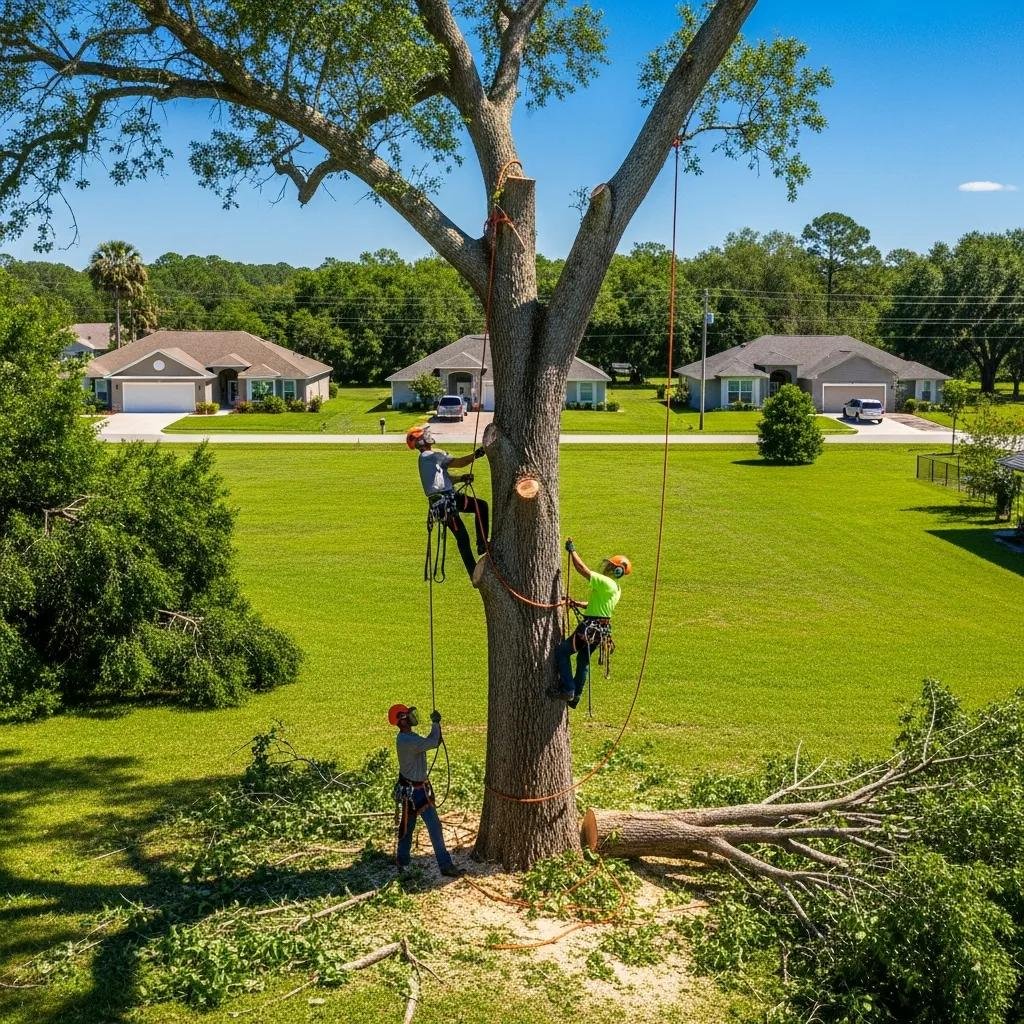
Top-Rated Tree Service in Ocala, Florida: Expert Solutions for Tree Removal, Trimming, and Emergency Care
Ocala Tree Service LLC provides expert tree removal, trimming, stump grinding, and 24/7 emergency care to protect property and improve landscape health. This article explains what homeowners and property managers in Ocala should expect when hiring professional tree care, covering costs and benefits, emergency storm response, best pruning practices, the value of ISA-certified arborist assessments, stump grinding methods, and local factors that shape service choices. Many property owners face urgent risk from leaning, diseased, or storm-damaged trees and need clear guidance on safety, permitting, and long-term maintenance; this guide offers practical, actionable answers informed by current practices. You will learn average cost drivers for removal, the step-by-step workflow for emergency response, proven pruning techniques for local species, why certified arborists matter for risk assessment, how stump grinding restores usable landscape, and which Ocala-specific pests and permits influence work plans. Throughout, the focus is on objective criteria—safety, liability reduction, and ecological handling—while noting where professional support and a free estimate can streamline decisions. Read on to compare options, follow checklists, and prepare for safe tree care in Ocala.
What Are the Costs and Benefits of Tree Removal in Ocala?
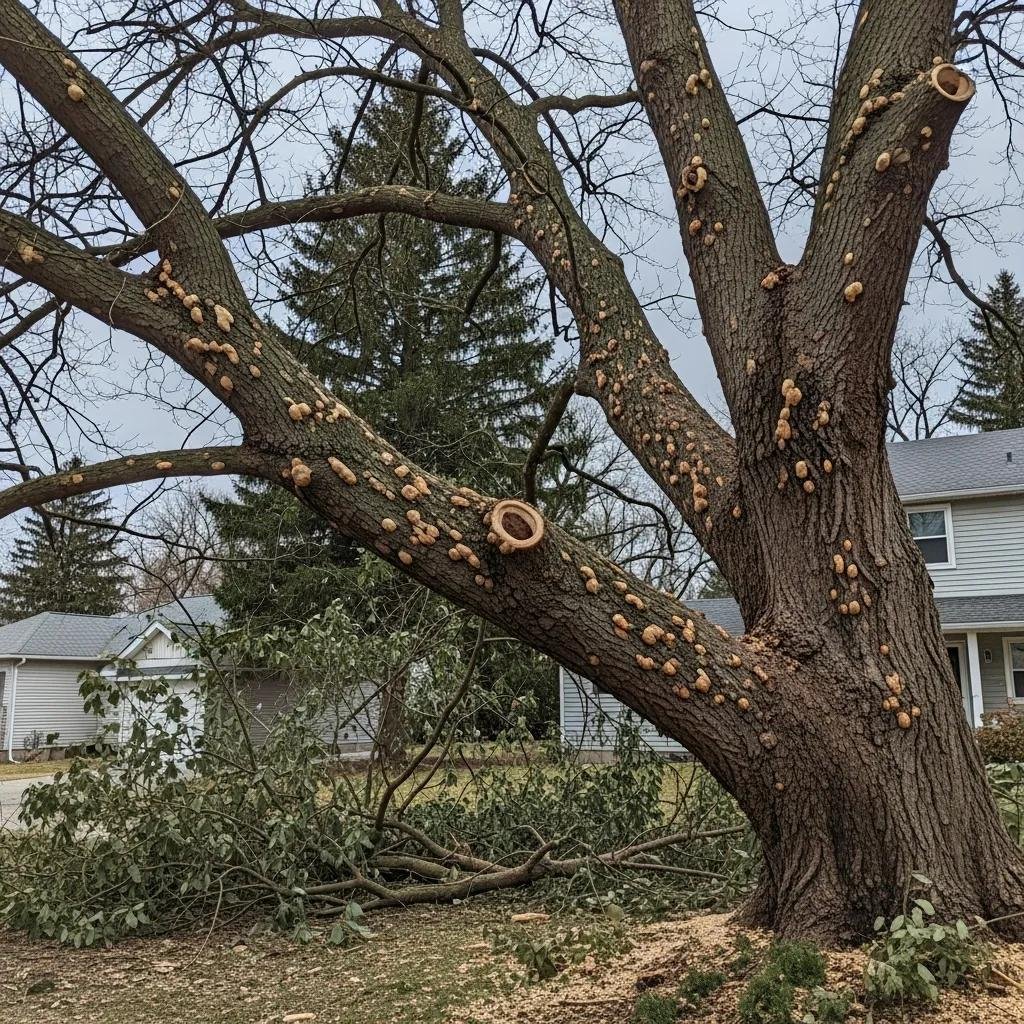
Tree removal costs in Ocala depend primarily on tree size, health, location relative to structures, and equipment needs; professional removal reduces liability and can increase usable property value. Large or hazardous trees require additional rigging, possibly crane hire or specialized rigging crews, which raises cost but ensures safe removal near homes or utilities. Proper professional removal also addresses debris disposal and recycling through mulching or forestry mulching, which mitigates environmental impacts and reduces ongoing maintenance. Understanding cost drivers helps property owners weigh immediate expense against long-term benefits in safety and landscape usability, which leads into how size and condition alter price bands. The next subsection breaks down typical cost scenarios and the specific condition factors that influence pricing.
Professional removal offers several direct benefits beyond debris removal:
- Safety and Liability Reduction: Removes imminent hazards that can damage property or injure people.
- Property Value and Usability: Frees space for landscaping, construction, or recreation.
- Environmental Management: Enables controlled disposal, recycling, and erosion control.
Introductory comparison of typical cost drivers follows in the table below to help readers quickly compare scenarios and benefits.
| Tree Size / Scenario | Cost Drivers | Typical Impact |
|---|---|---|
| Small yard tree (under 30 ft) | Access, minimal rigging, routine crew | Lower labor and disposal costs; quick completion |
| Medium tree (30–60 ft) | Height, canopy spread, proximity to structures | Moderate cost; may require sectional removal |
| Large or hazardous tree (over 60 ft) | Crane hire, advanced rigging, traffic control | Higher cost; necessary for safety and insurance compliance |
This table clarifies how size and access scale cost and risk, guiding owners toward appropriate professional plans. Understanding these factors leads directly into a granular look at how size and condition change pricing in real cases.
How Does Ocala Tree Removal Cost Vary by Tree Size and Condition?
Costs vary because contractors price by complexity: trunk diameter, canopy volume, presence of rot or pests, and accessibility determine crew size and equipment. A healthy small oak in a backyard costs substantially less than a diseased, leaning pine next to a home because the latter requires sectional removal, rigging, and possibly crane hire to protect structures. Emergency removals after storms often carry premium scheduling and stabilization work, and permits or traffic control increase administrative costs. Site inspection by a qualified crew is the only reliable way to produce an accurate estimate, and those inspections can reveal hidden root damage or structural defects that materially change scope. The comparison table above summarizes typical scenarios, and the next subsection explains the safety and environmental advantages that justify professional rates.
What Safety and Environmental Benefits Does Professional Tree Removal Provide?
Professional crews reduce risk through trained rigging, appropriate equipment, and insurance-backed operations that protect property owners from liability. Proper removal prevents secondary hazards such as root heave, pest infestation, and accelerated decay in nearby trees, while responsible disposal—mulching, recycling, or chipping—minimizes ecological disturbance. Trained arborists also advise on erosion control and post-removal restoration strategies, which preserves soil health and supports replanting when appropriate. Hiring qualified professionals ensures compliance with local regulations and may simplify insurance claims after storm damage.
With safety and environmental protections in place, property owners can make informed decisions about replanting and long-term landscape planning, and the next section describes what to expect from emergency tree services in Ocala.
How Does Emergency Tree Service in Ocala Provide 24/7 Storm Damage Response?
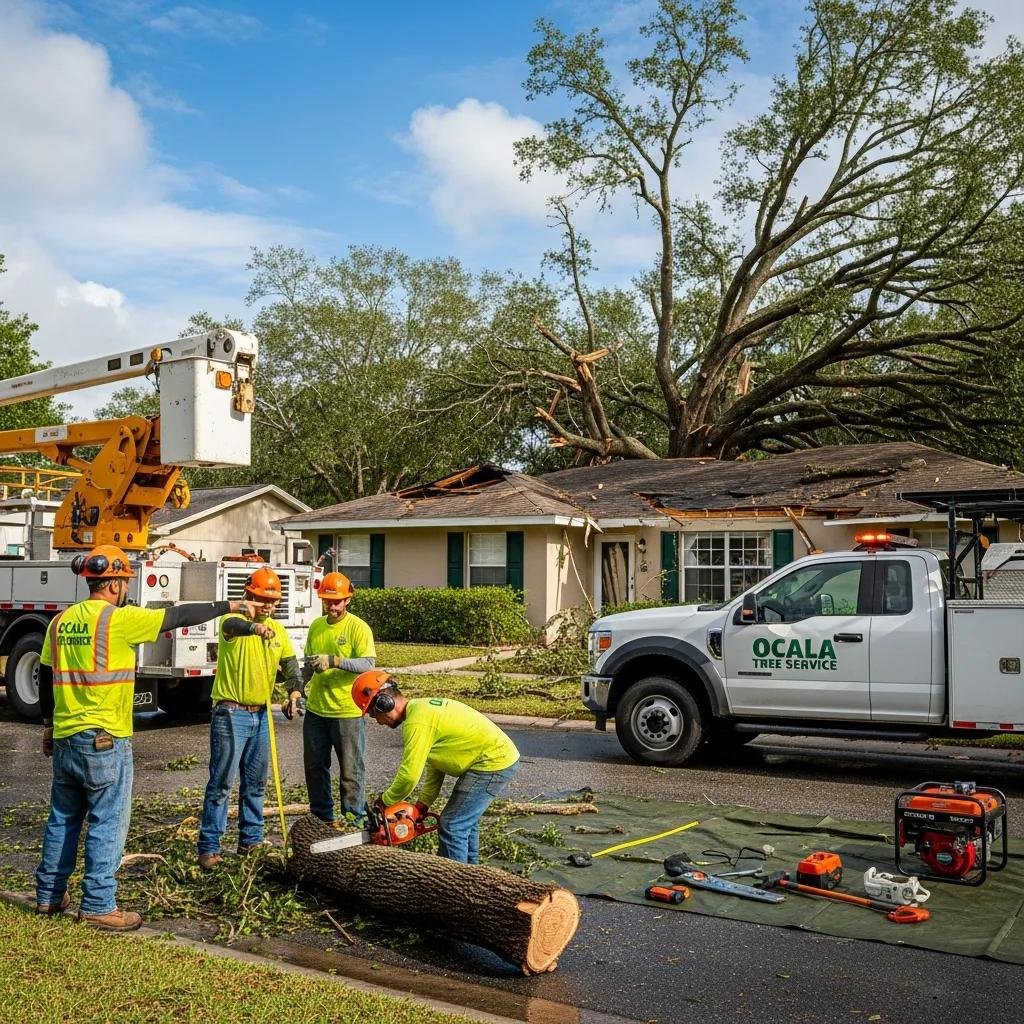
Emergency tree service in Ocala follows a clear workflow: immediate triage and dispatch, onsite safety assessment and stabilization, prioritized removal of life-safety hazards, and final cleanup and documentation for insurance.
- Initial Triage: Emergency dispatch evaluates the situation and assigns resources based on immediate threat.
- Onsite Safety Assessment: Trained arborists stabilize hazards and develop a removal plan.
- Priority Removal: Remove fallen trees on structures, clear routes for emergency services, and address power-line risks.
- Cleanup and Documentation: Complete debris removal and provide documentation for insurance claims.
When Should Property Owners Request Emergency Tree Services?
Property owners should call emergency services immediately when a tree has fallen on a structure, is entangled with power lines, or shows acute leaning or root failure after a storm. Non-urgent damage—such as broken branches not threatening safety—can often wait for scheduled service, but any sign that a tree compromises life or property requires immediate professional attention. For insurance purposes, document the damage with photos and notes before altering the scene when it is safe to do so; rapid professional intervention often preserves evidence needed for claims. Always prioritize human safety: stay clear of downed limbs and power lines, evacuate if necessary, and let trained crews handle technical stabilization. The next subsection explains what operational capabilities enable fast, reliable emergency response from local providers.
What Makes Ocala Tree Service LLC Reliable for Fast Emergency Response?
Ocala Tree Service LLC maintains local crews and on-call dispatch procedures that enable quick mobilization after calls, backed by appropriate equipment such as chippers, stump grinders, rigging gear, and crane hire when needed. Local knowledge of Ocala neighborhoods and common storm patterns helps crews prioritize threats and navigate municipal permitting or utility coordination efficiently. The company emphasizes licensed, insured operations and ISA-guided safety protocols to reduce liability and speed claim documentation, allowing homeowners to move from immediate hazard to recovery faster. In urgent situations, calling the listed phone number connects property owners to dispatch for rapid evaluation and scheduling, ensuring a practical next step for anyone facing storm damage. Understanding these logistics supports better homeowner preparedness and points toward best practices for routine tree care.
What Are the Best Practices for Tree Trimming and Pruning in Ocala, FL?
Effective trimming and pruning promote tree health, reduce storm damage risk, and improve landscape aesthetics when timed and executed according to species-specific needs. Best practices emphasize correct technique—structural pruning, canopy thinning, and deadwooding—applied at appropriate seasons to avoid stressing oaks, pines, palms, and other local species. Proper pruning reduces disease transmission, improves sunlight penetration, and directs growth away from structures and utilities, while safety measures and equipment selection protect both crew and property. Homeowners should consult qualified arborists for complex or high-tree work and follow municipal regulations when working near public right-of-way.
| Pruning Type | Best Practice | Benefit/Outcome |
|---|---|---|
| Structural Pruning | Remove codominant stems, establish strong scaffold | Long-term stability and reduced failure risk |
| Canopy Thinning | Selective branch removal to improve airflow | Reduced wind sail, disease prevention |
| Deadwooding | Remove dead branches to sound wood | Lowers failure risk and pest attraction |
This mapping helps property owners select the right approach and leads into more detailed explanations of health and aesthetic improvements.
Pruning yields both physiological and visual advantages that compound over seasons:
- Promotes Tree Health: Removes diseased or weak material to prevent spread.
- Improves Aesthetics: Shapes trees to enhance curb appeal and visibility.
- Enhances Safety: Reduces limb failure over structures and walkways.
How Does Tree Trimming Improve Tree Health and Property Aesthetics?
Tree trimming improves physiology by removing deadwood and crossing branches that harbor disease, which increases sunlight penetration and airflow within the canopy and promotes vigorous, directed new growth. Structural pruning corrects poor branch attachments and reduces the likelihood of split trunks and storm failure, which in turn protects nearby structures and utilities. Visually, selective shaping enhances sight lines, improves integrated landscape design, and can increase property value by maintaining mature trees in attractive form. Regular maintenance schedules tailored to species—oaks, pines, and palms—optimize long-term health and reduce emergency interventions. With these benefits in mind, the next subsection explains local regulatory considerations that property owners must check before pruning.
What Local Regulations Affect Tree Trimming in Ocala?
Local rules may require permits for trees on public right-of-way, protected species, or work that affects municipal infrastructure; property owners should verify city and county regulations before major trimming or removal. Some protected oaks or heritage trees trigger additional review, and work near utilities often requires coordination with utility companies or licensed crews. Consulting a certified arborist can streamline permit verification and documentation, ensuring compliance and avoiding fines or removal delays. When in doubt, request an arborist assessment that includes permit guidance and written recommendations to keep your project on track.
Why Should You Hire a Certified Arborist in Ocala for Tree Health and Risk Assessment?
An ISA-certified arborist brings formal training in tree biology, diagnosis, and safe mitigation techniques that translate to better long-term outcomes for trees and property. Certified professionals provide objective risk assessments, identify disease and pest problems early, and produce written recommendations or remediation plans that support insurance claims and permit applications. Arborist reports help prioritize work—whether preventative pruning, hazardous tree removal, or targeted treatments—and reduce unnecessary removals by recommending targeted interventions. Property owners benefit from evidence-based advice on soil treatment, fertilization, and pruning schedules tailored to local species and site conditions. The next subsection summarizes the qualifications that define an ISA-certified arborist and what deliverables to expect from an assessment.
After understanding why professional assessment matters, readers may choose to request a free consultation or estimate; Ocala Tree Service LLC offers ISA-qualified arborist services and free estimates to help property owners make informed decisions.
What Qualifications Define an ISA Certified Arborist in Ocala?
An ISA-certified arborist has passed credentialing that demonstrates mastery of tree biology, pruning standards, safety, and industry best practices, and applies those standards in diagnosis and treatment recommendations. Expect a certified arborist to provide a written evaluation that identifies structural defects, disease indicators, pest presence, and recommendations for remediation or monitoring. During an assessment, the arborist will inspect root collars, trunk integrity, canopy structure, and soil conditions to produce a prioritized action plan with cost considerations. This professional documentation strengthens permit applications and insurance communications, and sets the stage for effective preventive maintenance. With these qualifications in mind, the next subsection explores how arborist consultations prevent disease and hazards over time.
How Do Arborist Consultations Prevent Tree Diseases and Hazards?
Arborist consultations use diagnostic steps—visual inspection, soil analysis, and pest assessment—to detect early signs of decay, fungal infection, or structural weakness and recommend targeted interventions. Preventive measures include pruning schedules, localized soil amendments, root zone management, and integrated pest management strategies that reduce chemical exposure while improving tree resilience. Scheduled monitoring and maintenance plans prevent small defects from becoming large failures, thus lowering long-term costs and safety risks. An actionable arborist plan includes timelines for follow-up inspections and clear indicators for when more aggressive intervention is required. This preventive framework naturally connects to how stump grinding completes property restoration after removals.
How Does Stump Grinding in Ocala Complete Property Restoration?
Stump grinding removes visible trunk remnants and root collars to restore surface usability, reduce tripping hazards, and eliminate sites for pests and disease. Grinding is generally faster and less disruptive than full stump excavation, leaving wood chips that can be reused as mulch, while full removal is chosen when regrading or septic/root conflicts require deeper work. Professional stump grinding uses specialized stump grinders to grind below grade to a standard depth that prevents regrowth; crews then remove or redistribute chips and topsoil to prepare for replanting or lawn restoration.
| Method | Typical Result | Timeframe |
|---|---|---|
| Stump Grinding | Trunk removed below grade; chips produced for mulch | Same-day to one-day service completion |
| Full Stump Removal | Entire root ball excavated; site fully cleared | Multi-day; requires heavy equipment |
| Root Treatment + Grinding | Reduced regrowth risk with chemical or mechanical treatment | Several weeks monitoring and follow-up |
This table clarifies trade-offs between speed, disruption, and permanence, and the next subsection outlines the direct benefits of professional stump services.
Stump work restores spaces for play, planting, and construction while preventing pest attraction and unsightly regrowth:
- Eliminates Trip Hazards: Creates a level surface for lawns and pathways.
- Prevents Pest Habitat: Removes decaying wood that attracts insects.
- Enables Replanting or Construction: Frees space for new landscaping or structures.
What Are the Benefits of Professional Stump Removal and Grinding?
Professional stump removal eliminates physical hazards, reduces pest and fungal attractants, and opens the site for replanting or lawn restoration with minimal soil disruption. Grinding below grade prevents natural coppicing or suckering in species prone to regrowth, while professional cleanup recovers chips for mulch or removes them according to homeowner preference. For play areas or construction sites, full removal may be specified to prevent hidden root interference, and professionals provide guidance on backfilling and soil stabilization after removal. Well-executed stump services also minimize landscape disruption and speed the timeline to restore usable ground.
How Is Stump Grinding Performed Safely and Efficiently in Ocala?
Stump grinding uses rotating cutting wheels on purpose-built grinders to reduce stumps to chips while crews implement site protection measures to safeguard turf, irrigation, and nearby structures. Operators follow a safety checklist—equipment inspection, protective barriers, and proper PPE—to control flying debris and prevent accidental damage, and they clear the work zone of bystanders and pets. Typical depth standards remove the stump to a few inches below grade, and crews either leave chips for mulch or haul them away per homeowner preference, finishing with topsoil and seed or sod if requested. Efficient job sequencing and local knowledge reduce time on site and ensure the landscape is restored quickly for reuse.
What Local Factors Influence Tree Care Services in Ocala, Florida?
Climate, common species, soil types, and regulatory frameworks in Ocala shape service choices and treatment priorities for tree care providers. Hot, humid summers and periodic storms increase susceptibility to pests and windthrow, while species such as oaks, pines, and palms present distinct pruning, disease, and root-management needs. Soil compaction, drainage, and urban development affect root health and influence decisions about critical root zones during removal or stump work. Local permitting and protections for certain trees or right-of-way work require coordination with municipal authorities and often benefit from documented arborist assessments. The next subsection lists common species and diseases that change service approaches in the Ocala area.
Which Ocala Tree Species and Diseases Affect Service Approaches?
Common Ocala species—oaks, pines, and palms—each require tailored care: oaks need cautious pruning windows to reduce infection risk, pines demand attention to pitch canker and southern pine beetle, and palms often require specific removal of fronds and attention to bud health. Diseases such as oak wilt and root rot affect treatment choices; identification drives whether pruning, chemical treatment, or removal is recommended. Integrated management includes targeted pruning, soil health measures, and monitoring schedules tailored to each species’ biology to reduce long-term failure risks. Local extension resources and certified arborists can provide species-specific protocols and support for complex cases. Awareness of these species and diseases frames the permitting and regulation considerations that follow.
Providers should adapt techniques to species-specific vulnerabilities and local conditions, which we outline below and in the subsequent permitting subsection.What Permits and Regulations Should Property Owners Know?
Permits may be required for work affecting public right-of-way, protected trees, or projects that alter drainage or municipal vegetation, and property owners should confirm local rules before starting major removals. A certified arborist can help identify protected species and prepare documentation to streamline permit approvals, including impact assessments and mitigation plans. For work near utilities or on streets, coordination with utility providers and municipal departments is often mandated to ensure public safety and compliance. By confirming permit needs early and working with qualified professionals, owners reduce delays and regulatory risk while advancing safe, compliant tree care.
For property owners ready to proceed, remember that Ocala Tree Service LLC offers ISA-guided assessments, licensed and insured crews, and a free estimate to help prioritize work and plan remediation. If you need immediate assistance or want to request a free, no-pressure estimate, contact Ocala Tree Service LLC at (352) 460-3066 to discuss next steps and get a professional evaluation.